


TIMELINE
1914 - Camp Pathfinder Founded by William Bennett & Franklin Gray
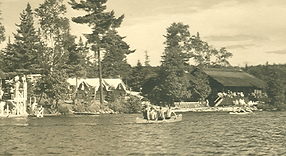
Camp is 5-6 tent platforms, a kitchen platform & a storehouse. Swim area was by the Cliffs
1962 - Chief Norton sells Camp to Bill Swift, Wendy Swift, and Frank Horton
1976 - 1983 - Lance Kennedy is Director
1983-1999 - Mac Rand is Owner
1984-1999 - Mac Rand is Director
2000 - 2023 - Glenn Arthurs & Mike Sladden are Owners
2000-2023 - Mike 'Sladds' Sladden is Director
1910
1906 - Camp Northway Founded
1918 - Grey sells Camp to Herman J "Chief" Norton and his wife Becky
1920
1930
1940
1950
1960
1962 - 1965 - Bill Swift is Camp Director
1965 - Camp Share sold from Swift & Horton to Swift & Thrall - Roy Thrall officially now joins Bill Swift as Co-Owner
1965 - 1975 - Roy Thrall is Director
1970
1975 - Camp Buy Out - Ownership goes from Swift & Thrall to solely Roy Thrall, who owns camp until 1982
1980
1982 - Roy Thrall sells camp to Mac Rand
1990
1999 - Mac Rand sells Camp to Glenn Arthurs & Mike Sladden
2000
2010
2020
1918 - 1961 - "Chief" Norton is Owner & Director
1914 - World War I begins
1918 - World War I ends
1939 - World War II begins
1945 - World War II ends
1955 - Vietnam War Begins
1975 - Vietnam War ends
1921 - Camp Ahmek Founded
1924 - Camp Wapomeo Founded
1925 - Camp Tanamakoon Founded
1934 - Camp Arowhon Founded
1936 - Camp Tamakwa founded
1913 - Algonquin National Park of Ontario, established in 1893, changes its name to Algonquin Provincial Park
1992 - Algonquin Park Logging Museum opens
1951 - Algonquin Park Art Centre opens
1936 - Highway 60 is created, connecting Huntsville to Dwight
1995 - The Canadian National Railway (CNR) running through the northern part of the Park was abandoned
1912 - Work begins on the new Canadian National Railway (CNR) connecting Ottawa to Sudbury, running through the north of the Park
1909 - Coleman develops a liquid fuel lantern with a small base tank that is pressurized using a hand pump.
1911 - First boyscout handbook is printed showing 10 different styles of camping tents, a game changer for outdoor camps and campers
1959 - Eureka! introduces the first fast-to-set-up freestanding tent
1960s - Lightweight metal poles replace wooden ones for tents
1970s - Eureka! begins producing backpack-storable tents
1942 - Coleman creates the single burner stove amid WWII
1972 - Therm-a-rest inflatable sleeping pad is created
1976 - GORE-TEX jackets make their first appearance
1965 - Kevlar is invented
1973 - The first Kevlar canoe is created by Mad River Canoe
1972 - Whitewater paddling begins to boom thanks to media attention like 'Diliverance' and the addition of Canoe Slalom in the Munich Olympics
1960 - CPR is developed
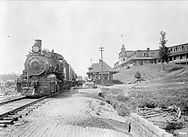
1908 - Highland Inn is built by the Grand Trunk Railway on Cache Lake
1932 - The highland Inn closes
1929 - The Great Depression begins
1939 - The Great Depression ends
1981 - Synthetic fleece in invented
1920s - In Norton's first years, Lodge III, the 'Rec Lodge' (Todays Palace End) and Norton Family Cabin (Where PX stands today) were constructed
1923 - 1st swim dock is built at the current location, multiple rebuilds happened over the upcoming decades
1927 - The original Bug House is built
1932 - Dining Hall. Prior to this time, meals were made and served at a large tent platform in upper Stalker Park just below the PX site. The new Dining Hall originally had a large open porch on the water, now enclosed and known as the ‘porch’ part of the hall.
1936 - Trading Post is built - a gift of Mr. Enos of Buffalo in honor of his sons Dud and Larry
1930s - Construction begins on Lodge I, Lodge II, and a clay tennis court built by hand over several seasons, known today as the Ballin’ Court
1940 - Jerry Hickey and Fred Lamke build the Jean Norton Chapel
1944 - The original ballfield is reclaimed with scavenged soil and sand creating Stalker park, where Charlie Stalker planted trees so familiar to us today. Fred Lamke begins building current Ballfield.
1944 - Norton Family Cabin becomes the PX, a multi-purpose space named PX after military base stores, due to the lingo common in WWII
1946 - Opening pitch on the new ballfield (current location)
1946 - Rec Lodge is built. Lore says that Canadian veterans returning from WWII built it.
1940s – At some point, the canoe dock was relocated from Cedars point to current spot
1980s – Miels Smith leads effort to build rock walls to protect central Stalker Park
1989 – current version of the Canoe Dock was built with three floating fingers … the funds came from camp’s first Reunion, the 75 th , held in August 1988.
1991 – June crew builds the current swim dock configuration, perpendicular to shore. Crew included Trip Pierson under direction of Tom Pigeon
1992 – First wedding at Chapel, Mac Rand married Ann
1990s – Quiet returns to camp as the generator is retired and submarine hydro cable connects CPI to the grid. Ropes course elements start to take shape in current location.
2003 - Rec Lodge renovation. A large staff crew worked on this, led by Hudson Willers’ dad Erik.
Kitchen dock is completely rebuilt.
2003 - Canoe Dock gets extended to hold more boats as the fleet grows in size. The Rec Lodge receives a new roof at this same time.
2020 - Covid crew rips out and rebuilds entire canoe dock with help from Doug Bois rebuilding the original crib structure.
Ballfield 'Scar" is made when construction vehicles use the path to gut the entire sinking ballfield and rebuilt, holding a system of French drains to prevent future damage.
2012 - motorboat dock is rips out and rebuilt
2009/10 - Swim Dock gets new towers and is rebuilt once more
2021 - Rec Lodge Dock is rebuilt with new staricase
2016 - Sail dock floaters are built
2017 - Ladies Dock floater is built
2018 - Norton Dock floater is built
2014 - foundation, electrical and interior work was done to restructure the TP
2015 - Bug House building was built by Gill Stanley, with Grif Menzies and Karl Doench helping.
2010 - Bughouse was built by Kirby Brandt, who had been an AO carpenter, and Jeff Brown a local carpenter who had
attended Pathfinder.
2006 - Bell Tower Area - Camper/staff man Joe Markwell was studying landscape design when he led the reshaping of the timbered mound and seating area under the camp bell.
2007 - Glenn decided to replace the existing owner’s cabin, built by Roy Thrall. The workers were all local tradesmen, led by Tom Pigeon. Included alumnus Graham England, and Bob Dylan and Bill Conkwright.
2006 - Cook’s Cabin - Gill Stanley rebuilt it in 2006 from the ground up. The work permit finally appeared a day after Gill started, after a
warden stopped by who threatened him with jail.
2010 - Sunnyvale built to handle the increase in older campers. It inhabits the old volleyball court space, which moved to the former basketball court, which moved down to what had been a tennis court.
2001 - The railing tooner was purchased
2010 - The work barge railing less sooner was purchased
1914-1918
During WWI sentries were armed and stationed at points along the Algonquin route of the railway. Sabotage was feared likely by immigrant Canadians sympathetic to enemy Germany.
1915 - The Canadian National Railway had a line running through the northern section of the Park, from Ottawa to Capreol near Sudbury. This line was in use until 1995. Brent was a logging hub and divisional point on this railway, accessed only by rail for many years before the Brent Road.
1923 - GTR bankrupted and government takes over the line as part of Canadian National Railways
1933 -Reduced traffic and the original trestle bridge between Cache L. and Two Rivers was condemned after flooding but not replaced. Thus trains stopped making through-runs.
1952 - Rail section from Huntsville to Cache L. ends use. Summer campers thereafter came by rail to Huntsville, then were bussed into the Park.
1959 - Railroad Section from Renfrew to Lake of Two Rivers ends use.
Historical events, Algonquin Park expansion, transportation, camping gear innovations and game changers, and of course how Pathfinder island grew and expanded over time into what it is today.






1984 - Swift Canoe & Kayak is founded
1961 - Algonquin Outfitters is founded, opening on Oxtongue Lake
1917 - Tom Thompson dies on Canoe Lake, his death is still a mystery
1983 - The first commercially available cellphone is made
1973 - The first text message is send and 'smartphones' begin their grow
1973 - The iPhone is invented
1975 - The digital camera is invented
1936 - Canadian Camping Association (CCA) is founded


1999 - Mac Rand sells Camp to Glenn Arthurs & Mike Sladden
